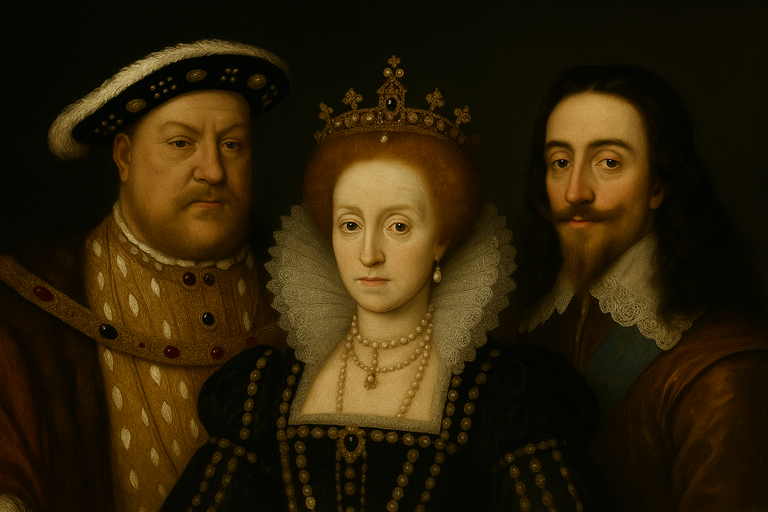
When preparing for the Life in the UK Test, you’ll need to understand which monarchs shaped British history. Our Life in the UK Test platform covers all the content you'll need to know about the kings and queens and tests you on it until you know it. It also includes questions on this area in the practice tests, drawn from actual questions that have come up in the real exam. (Don't forget to join our Facebook community who are all learning for the test!)
In the official Life in the UK Test content, not every king or queen is covered, but a handful appear regularly in questions. From William the Conqueror in 1066 to Elizabeth I and Charles I, these rulers influenced battles, religion, politics and empire. This guide takes you century by century through the monarchs most likely to come up, giving you a clear, focused way to revise the key figures that matter most for the test.
Who were important monarchs in the 11th century?
👑 William the Conqueror
- From Normandy (France).
- Defeated King Harold at the Battle of Hastings (1066).
Who were important monarchs in the 15th century?
👑 Richard III
- From the House of Lancaster.
- Killed at the Battle of Bosworth Field (1485), ending the Wars of the Roses.
👑 Henry VII
- From the House of York.
- Became king after victory at Bosworth.
- United the houses of Lancaster and York by marrying Elizabeth of York.
Who were important monarchs in the 16th century?
👑 Henry VIII
- Famous for his six wives and breaking from the Church of Rome.
- Established the Church of England.
👑 Mary I
- Devout Catholic, nicknamed “Bloody Mary” for persecuting Protestants.
👑 Elizabeth I (1558–1603)
- Defeated the Spanish Armada (1588).
- Start of English colonies in America.
Who were important monarchs in the 17th century?
👑 Charles I
- Conflict with Parliament led to the English Civil War (Parliament vs. the monarchy).
- Executed in 1649.
⚔️ Oliver Cromwell
- After Charles I, England became a republic called the Commonwealth.
- Wasn’t a monarch; ruled as Lord Protector until his death.
👑 Charles II
- Escaped capture during the English Civil War by hiding in an oak tree.
- Restored to the throne in 1660 (The Restoration).
👑 James II (1685–1688)
- Catholic king, unpopular with Parliament.
- Overthrown in the Glorious Revolution (1688).
👑 William and Mary
- William of Orange (from the Netherlands) was invited by Parliament and leading nobles to take the throne after James II was deposed.
- Mary, daughter of James II, ruled jointly with him.
- Known as the Glorious Revolution because James II was overthrown without a major battle, securing Protestant rule and strengthening the power of Parliament.
Who were important monarchs in the 18th century?
👑 George II
- Bonnie Prince Charlie, supported by men from the Scottish Highlands, tried to restore the Stuart line.
- George II’s forces defeated him at the Battle of Culloden (1746).
Who were important monarchs in the 19th century?
👑 Queen Victoria (1837–1901)
- Became queen at just 18.
- Reigned for nearly 64 years - the Victorian Age.
Who were important monarchs in the 20th and 21st century?
👑 Elizabeth II (1952–2022)
- The UK’s longest-reigning monarch until her death in 2022.
- Celebrated her Diamond Jubilee in 2012, marking 60 years on the throne.
👑 Charles III
- The current king, who succeeded his mother Elizabeth II in 2022.
How well do you know the British monarchs tested in the Life in the UK Test?
Question: William the Conqueror was from Normandy (France). At which battle did he defeat King Harold?
Answer: He defeated King Harold at the Battle of Hastings (1066).
Question: Richard III was from the House of Lancaster. At which battle was he killed, and what major conflict did this end?
Answer: He was killed at the Battle of Bosworth Field (1485), which ended the Wars of the Roses.
Question: Henry VII was from the House of York and became king after victory at Bosworth. Which marriage united the houses of Lancaster and York?
Answer: He united the houses of Lancaster and York by marrying Elizabeth of York.
Question: Henry VIII was famous for his six wives and breaking from the Church of Rome. What did he establish?
Answer: He established the Church of England.
Question: Mary I was a devout Catholic. What nickname did she earn for persecuting Protestants?
Answer: She was nicknamed "Bloody Mary" for persecuting Protestants.
Question: Elizabeth I was the last Tudor monarch and oversaw the start of English colonies in America. Which naval force did she defeat in 1588?
Answer: She defeated the Spanish Armada.
Question: Charles I's conflict with Parliament led to the English Civil War (Parliament vs. the monarchy). What happened to him after he was captured?
Answer: He was executed in 1649.
Question: After Charles I, England became a republic called the Commonwealth. What title did Oliver Cromwell rule with until his death?
Answer: He ruled as Lord Protector until his death.
Question: Charles II escaped capture during the English Civil War by hiding in an oak tree. What was the event called when he was eventually restored to the throne?
Answer: He was restored to the throne in 1660 in an event called The Restoration.
Question: James II was a Catholic king, making him unpopular with Parliament. During which revolution was he overthrown?
Answer: He was overthrown in the Glorious Revolution (1688), which was named for the fact that it occurred without a major battle.
Question: William of Orange was from the Netherlands and was invited by Parliament and leading nobles to take the throne after James II was deposed. With whom did he rule jointly?
Answer: He ruled jointly with Mary, daughter of James II.
Question: Bonnie Prince Charlie was supported by men from the Scottish Highlands and tried to restore the Stuart line. At which 1746 battle did George II's forces defeat him?
Answer: George II's forces defeated him at the Battle of Culloden (1746).
Question: Queen Victoria became queen at just 18 and reigned for nearly 64 years during the Victorian Age. What did she oversee Britain's rise as?
Answer: She oversaw Britain's rise as a global power.
Question: Elizabeth II was the UK's longest-reigning monarch until her death in 2022. Which jubilee did she celebrate in 2012, and how many years on the throne did this mark?
Answer: She celebrated her Diamond Jubilee in 2012, marking 60 years on the throne.
Question: Charles III is the current king. Whom did he succeed in 2022?
Answer: He succeeded his mother Elizabeth II in 2022.
Where to from here?
Our Life in the UK Test platform covers all the content you'll need to know. The platform also includes 16 practice tests, drawn from actual questions that have come up in the real exam, ensuring you're fully prepared for whatever the test throws at you. Sign up today to start practising smarter and make sure you’re fully prepared. You can also join our Facebook community who are all learning for the test!
Use our easy-to-learn summary of what countries make up the United Kingdom - learn here.